
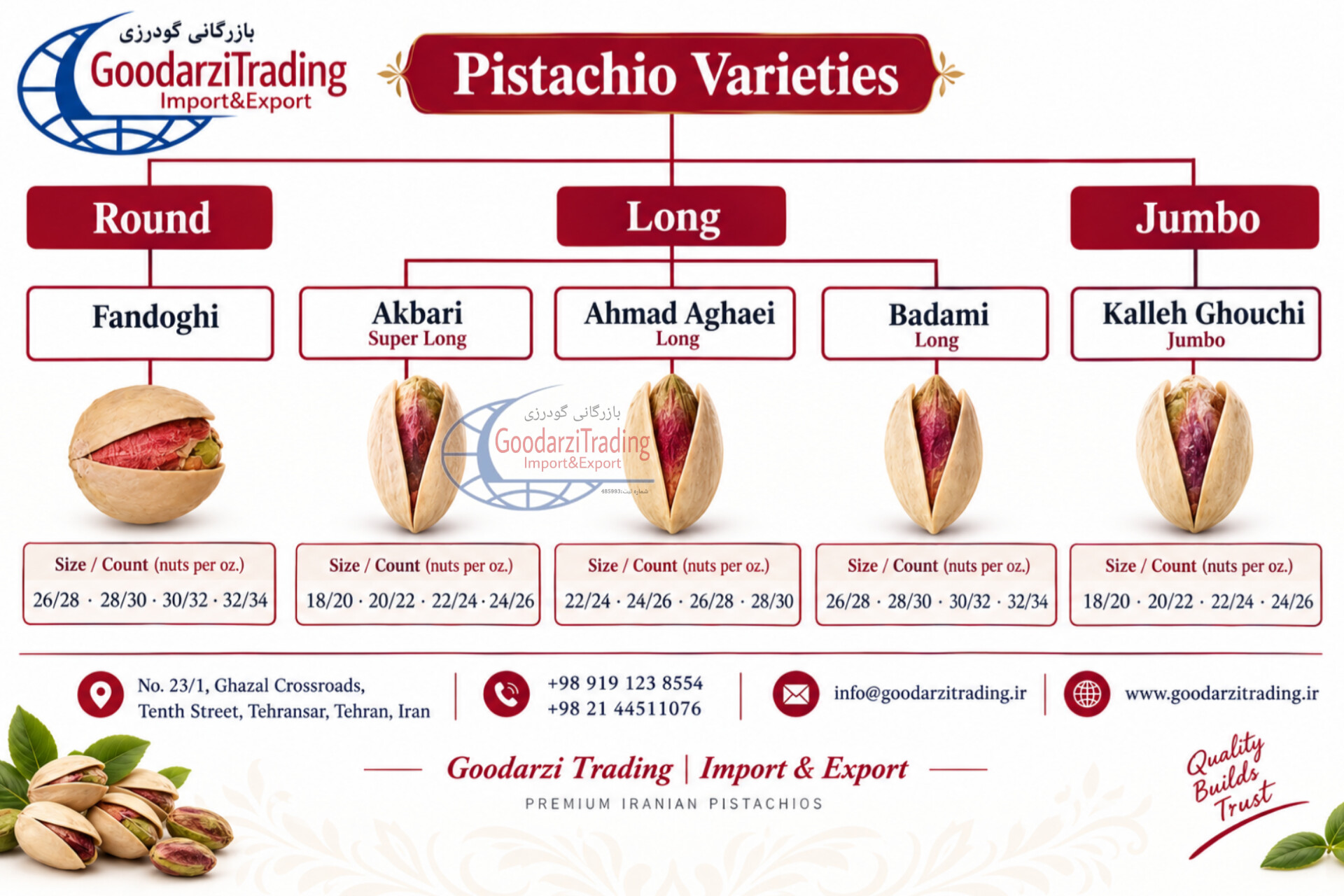
The basic ounce-count method
Pistachio size is commonly expressed by counting how many in-shell nuts make one ounce by weight. Because the measure is a count within a fixed weight, fewer nuts per ounce indicates a larger average nut size.
For example, a lot described with a lower count range contains larger nuts on average than a lot described with a higher count range. The agreed method and tolerance should appear in the purchase specification.
Why sampling affects the result
A count taken from one handful may not represent an entire lot. Buyers and sellers should agree how samples are drawn, how many measurements are taken and how results are averaged.
Size should be considered with variety, open-shell percentage, moisture, defects, foreign matter and the required aflatoxin report rather than used as the only quality criterion.
What to put in a purchase specification
A clear pistachio inquiry should identify:
- Variety, such as Akbari, Ahmad Aghaei, Kalleh Ghouchi or Fandoghi
- Raw, roasted or salted; in-shell or kernel
- Required ounce-count range and sampling tolerance
- Packing format and order quantity
- Aflatoxin testing and destination document requirements
Frequently asked questions
Does a lower pistachio ounce count mean larger nuts?
Yes. The count records how many nuts make one ounce, so a lower count indicates a larger average nut size.
Is ounce size the same as pistachio variety?
No. Variety identifies the cultivar or commercial type, while ounce count describes average in-shell nut size.
What is the published MOQ for Iranian pistachios?
Goodarzi Trading lists a minimum order of 1 metric tonne for Iranian pistachios.